
By Bulletin Staff
NASA, the US space agency, is studying the possibility of using artificial intelligence to assist in the detection of zombie outbreaks from space, according to sources familiar with the project.
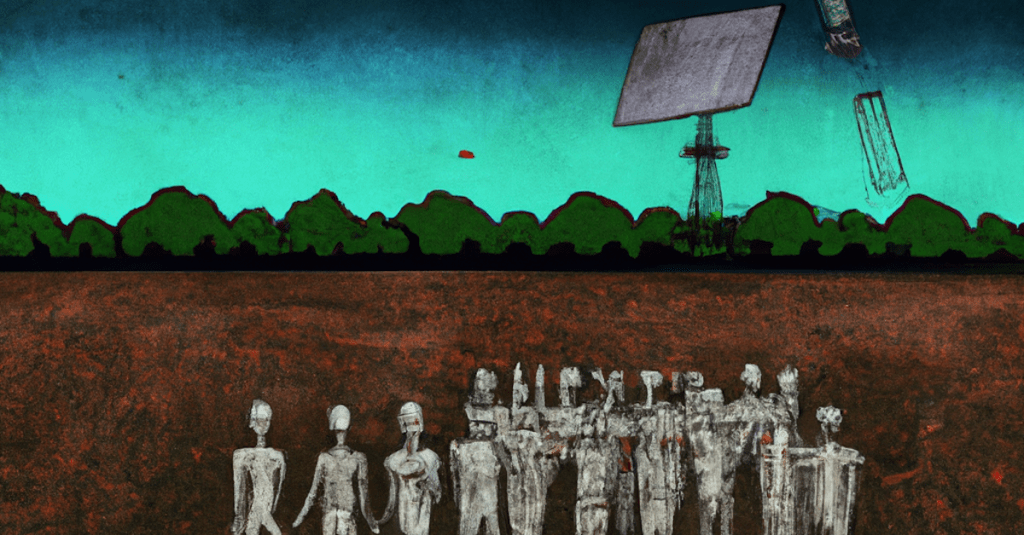
The proposed initiative, dubbed Zombie Outbreak Monitoring by AI (ZOMBAI), would involve satellites outfitted with high-resolution imaging sensors constantly monitoring the planet’s surface, collecting data in various spectrums, including visible light, thermal and infrared.
The space agency would train AI algorithms specifically to analyze the satellite data in real time to identify signs of zombie activity or infected areas. For example, the algorithms would search for patterns and anomalies associated with the undead, such as large groups of moving, human-like figures in unexpected areas.
Thermal and infrared data also could help pinpoint areas with unusual swings in temperature signatures, on the theory that, as a concentrated human population is rapidly turned into undead, the signature of the populated area would cool quickly. This could help to identify outbreaks in remote areas that typically are cut off from regular communications with the outside world.
The idea of combining advanced satellite imaging technology with powerful AI algorithms to combat zombie outbreaks stems from similar applications of AI to study the effects of climate change, according to Arnie Irwin, a professor of artificial intelligence at the University of Fellingham in New York, who is not involved in the space agency’s project but has written previously about the potential to use AI for zombie outbreak detection.
“As with climate data, the data sets around zombie outbreaks are gigantic. Without AI, it’s simply not possible to analyze and make informed decisions based on those data in a timely enough manner to respond to an undead outbreak before it gets out of hand,” Irwin said.
Initial Focus on Training the Algorithms
A source familiar with ZOMBAI, who requested anonymity because they are not authorized to speak on behalf of the project, said that initial funding for the proposed project would be for a proof of concept focused on developing the necessary algorithms based on datasets from a handful of existing climate satellites that would be temporarily repurposed to support the project.
If the proof of concept proves successful, the next phase would see a network of more than 150 dedicated satellites put into orbit over a period of several years to support the effort on a long-term basis, the source said. Over time, the AI system would be continuously retrained to improve its detection accuracy and to adapt to evolving zombie behaviors.
Once the network is fully operational, ZOMBAI would be integrated with data from the ground-based sensors and drones that operate as part of the Department of Homeland Security’s National Zombie Outbreak Alert System. A separate project already underway as part of the alert system aims to use AI to coordinate automated responses to outbreaks, such as activating automated defense systems, warning nearby populations or dispatching rescue teams to affected areas.
Ethics and Privacy Concerns
The use of AI as part of zombie detection and response is not without detractors. Civil liberties groups have raised privacy and ethical concerns related to mass surveillance from space and called for strict regulations and safeguards to protect the rights of the living.
“Advanced AI systems are essentially ‘black boxes,’ and it can be virtually impossible to understand how they reached a decision,” said Parker Wang, a lawyer specializing in responsible and ethical AI issues with the Washington-based Freedom and Rights Advocacy Coalition. “In that sense, these AI systems are a lot like zombie hordes – they both can be highly unpredictable.”
As an example of potential ethical issues stemming from the ZOMBAI project, Wang said that AI systems could generate false positives, leading to unwarranted panic and potential harm to innocents, particularly if the living are mistakenly identified as undead. “A ‘rogue’ AI system could trigger actions that wind up getting people killed, and we would have no idea why,” Wang said.
Ellen Denbo, director of AI research with the Los Angeles-based Civil Liberties Preservation Initiative, said that her primary concern with the project is the potential erosion of individual privacy. From her perspective, the deployment of AI for surveillance from space raises serious questions about consent, transparency and accountability.
“While we recognize the imperative of safeguarding lives during an outbreak, we have to be vigilant in upholding the fundamental rights and freedoms that form the bedrock of our society,” Arden said. “We need to strike a balance between public safety and the preservation of our rights, and we need to ensure that the measures taken today to fend off the undead do not compromise the values we hold dear as living beings tomorrow.”
Note: The Bulletin of the Zombie Scientists is a work of fiction. Any names or characters, businesses or places, events or incidents, are fictitious. Any resemblance to actual persons, living or dead, or actual events is entirely coincidental.
 Bulletin of the Zombie Scientists
Leave a comment