
By Bulletin Staff
The recipients of the 2023 Nobel prize for physiology and medicine were announced this week, and once again the awarding committee overlooked nominees from the zombie science community, opting instead to present the prize to a pair of “mainstream” researchers.
Scientist Katalin Kariko and immunologist Drew Weissman were awarded the prize for their groundbreaking work that led to the development of messenger RNA (mRNA) vaccines, which played a key role in helping to reduce the public health impact of the coronavirus pandemic.
The Nobel Prize is administered by the Nobel Foundation, based in Stockholm, and the Karolinska Institutet medical university awards the prize for physiology and medicine. The foundation was formed using a bequest from Alfred Nobel, the Swedish inventor of dynamite.
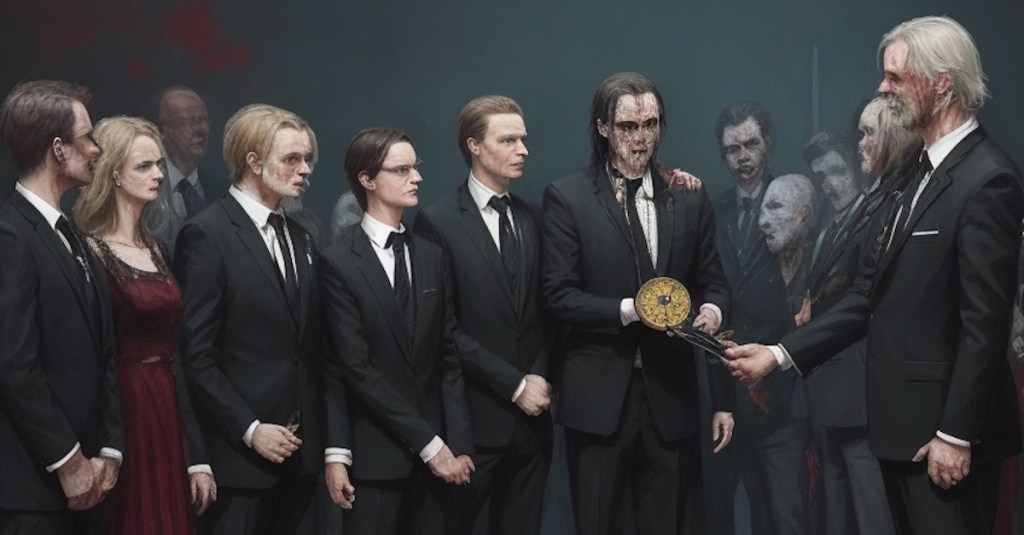
Nominees for this year’s physiology and medicine prize included Dr. Emily Weaver, Dr. Victor Renfield and Dr. Maria Santos, widely praised for their groundbreaking research into the physiology of zombification. The trio are also known for their work on methods to suppress and treat the reanimation of the deceased, which, it has to be said, have thus far proved unsuccessful.
Nobel’s Cold Shoulder “Difficult to Comprehend”
Reached for comment about the prize committee’s decision, Dr. Weaver was magnanimous. “While it is, of course, an honor to be considered for such a prestigious award, the pursuit of scientific knowledge and its application for the betterment of humanity is a collective effort. I congratulate Kariko and Weissman for their pioneering work, which demonstrates the incredible power of science to address our world’s most pressing challenges.”
Dr. Weaver added that the committee’s decision will not deter her group’s ongoing work to develop ways to slow or reverse the zombification process. “Our team will continue this critical research to help make the world safe from the ever-present yet often underestimated zombie threat,” she said.
For his part, Dr. Renfield, expressed disappointment and frustration that his team’s work was overlooked by the Nobel Prize committee. “While I congratulate the recipients of this year’s Nobel Prize for their work, I am deeply disappointed that our team’s contributions to understanding and managing the zombie threat have not been recognized at this level. Our research has been dedicated to addressing a very real and persistent danger to humanity, and the lack of recognition for this work is, quite frankly, difficult to comprehend.”
Dr. Santos could not be reached for comment about the prize committee’s decision, but in the past she has expressed indifference to receiving recognition for her work. In a 2021 interview with Popular Zombie Science magazine, she said that she gives little thought to prizes and awards.
“Our research into the zombie threat has never been about seeking recognition; it’s been about addressing the very real danger that ravenous hordes of the undead pose to humanity. Awards and medals are nice, but they only have a practical impact when you use them to cave in a zombie’s skill to crush its brain,” Dr. Santos said.
History of Snubs
Doctors Weaver, Renfield and Santos join the illustrious company of other zombie science pioneers that have been overlooked by the Nobel Prize committee. In fact, the committee only began allowing nominations from this branch of science in the last 25 years, dismissing zombie science previously as little more than a branch of mortuary science.
The first zombie science nominees, for the 1998 prize, were Benjamin Mitchell, Elena Ramirez and Hiroshi Tanaka, nominated for their efforts in the early 1990s to develop a vaccine against the zombie virus. While ultimately fruitless, the trio’s work led to important breakthroughs in the understanding of how the zombie virus spreads from human to human.
Last year’s nominees for the prize included Xavier Dupont and Dr. Mei Ling Chen, cited for their research into the physiological basis of zombie behavior patterns, aimed at developing strategies to redirect and control zombie hordes.
For 2021, Antonia Petrovich and Malik Johnson were nominated for their work on understanding and preventing the transmission of the zombie virus through innovative public health measures, education and the development of protective technologies.
Burt Galager, director of the O’Bannon Institute for Undead Medicine at the University of University City in Missouri, said that the prize committee’s snub of zombie science is not surprising and fits a pattern of other branches of research not fully accepting their zombie-focused colleagues as “serious scientists.”
“Listen, the prize committee members aren’t going to take our research seriously until they are personally faced with a bunch of reanimated corpses from Skogskyrkogården cemetery that are killing and eating people. When the committee members are all getting turned into human Swedish meatballs by the rampaging dead, that’s when our research will get the recognition it deserves in Stockholm,” Galager said.
Note: The Bulletin of the Zombie Scientists is a work of fiction. Any resemblance to persons (living, dead or living dead), actual organizations or actual events is entirely coincidental. See our About page and our Origin Story.
More Recent Posts
- Administration Weighs Deploying Undead to “Purify Woke Cities”
- President Fires Zombie Statistics Bureau Chief After Reported Rise in Undead Numbers
- Zombies of Different Generations Drawn to Different “Places of Meaning,” Study Finds
- “Z Visa” Program Would Let Wealthy Buy US Entry for Their Undead Relatives
- 6 Weeks after “Liberation Day,” Tariffs Still Loom for “Zombia”
 Bulletin of the Zombie Scientists
Leave a comment