
By Bulletin Staff
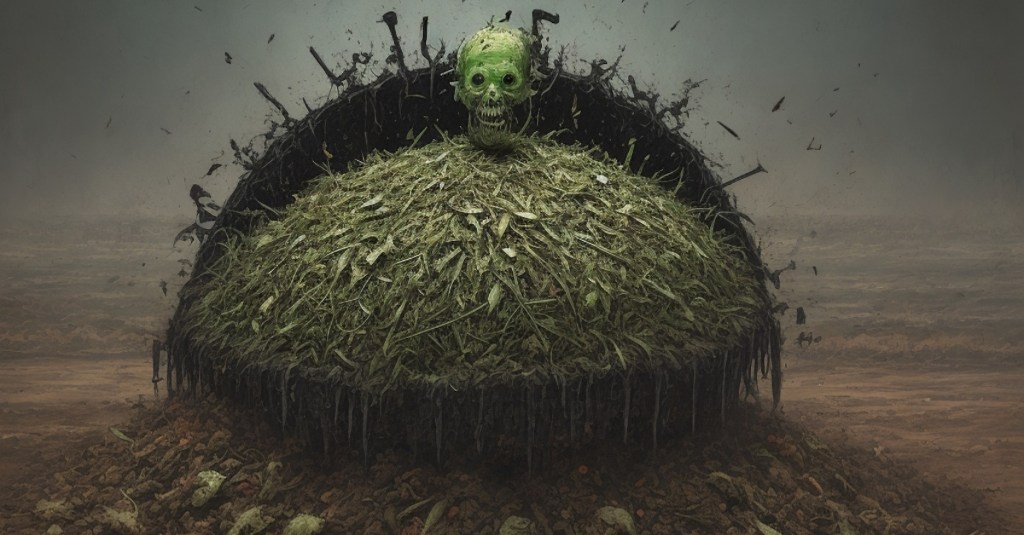
A research team in New Mexico believes they have perfected a process for composting zombies, creating a new kind of cheap, organic fertilizer that could have enormous environmental and economic benefits for the global agriculture sector.
The team, from the Roswell Institute for Undead Research, announced initial results of its work at the 2023 World of Fertilizer Conference in Dallas last week, revealing that the project had advanced to the stage of using what they call “zompost” in the cultivation of non-food crops.
While previous attempts to compost zombies have proved unsuccessful, the New Mexico team says that their techniques for ensuring the proper carbon-to-nitrogen (C:N) ratio, correct aeration, and the right mix of microbes used during the process have made the dream of turning vast piles of undead husks into useful fertilizer a reality.
Making “Zompost”
In their presentation, the researchers describe the “zomposting” process, which begins with collecting ethically sourced undead remains that are finely shredded into smaller bits, much like yard or kitchen waste is broken down in traditional composting.
The zompost materials are stored in large bins where the team monitors and adjusts the balance of carbon and nitrogen in the mixture. The zombies themselves provide the nitrogen source courtesy of their protein-rich tissues, while carbon-rich materials like wood chips or plant matter are added to achieve the ideal C:N ratio.
The zomposting process is aerobic, requiring oxygen, to ensure safe decomposition, so the research team employs specially designed ventilation and aeration systems to promote microbial activity while preventing the emission of foul odors or hazardous gases.
Even more so than with traditional composting, managing the temperature of the zompost mix is critical, according to the researchers. The high temperatures generated during decomposition not only break down zombie tissues but also serve to kill the zombie virus in the remains.
The team adds a proprietary blend of microbes during the zomposting process to adjust the pH of the resultant material to ensure that it is suitable for plants that prefer slightly acidic to neutral soils.
The entire zomposting process can take up to four months, depending on the quality of the undead husks, based on how long they had been dead before becoming zompost feedstock.
Upon completion of the process, the resulting zompost goes through rigorous testing to ensure that no zombie virus remains and that the material is safe for agricultural use. Once it’s deemed safe, the zombie compost is then used as a soil conditioner or applied directly to growing plants.
Increased Yields, Ethical Questions
At the Dallas conference, the team announced that they have already been using zompost on a small scale in the cultivation of two non-food crops, cotton and hemp, and that the results have been encouraging.
“To date we have seen yield rates in fields fertilized with zompost at least comparable to, and in some cases better than, fields using traditional chemical or organic fertilizers. These results suggest that zombie-based compost could be commercially viable and agriculturally sustainable,” said Dr. William Simonson, the lead researcher on the team.
The 2019 Zombies in Agriculture Act bans the use of zombies or zombie materials in the cultivation of food crops, but it allows for experimental use of undead-based materials with a special permit from the US Department of Agriculture.
Dr. Simonson said that the team began using the zompost on non-food crops out of an abundance of caution to ensure that it was safe to use in the field. Pending results from its initial testing, the team plans to apply for a USDA permit to test the material on food crops, possibly as early as late 2024.
In Dallas, Dr. Simonson said that his team recognizes that zomposting raises ethical concerns about the use of the undead, but he highlighted that the project used only zombies that, while alive, had donated their bodies to science in the event of their death.
Science ethicists have questioned whether this kind of donation applies to a situation where a person turns into a zombie. But the overall scientific community remains split on the issue, and many researchers have taken the position that being undead is essentially the same as being dead, so the donation is valid.
How Practical Is Zomposting?
Perhaps the larger question for the New Mexico team is how practical zompost would be for industrial agriculture. The conversion rate for zompost – that is, how much zompost you get out of a given amount of zombie waste – ranges from 75% to 85%, according to their presentation in Dallas, which is roughly comparable to other organic materials.
At that rate, it would take anywhere from 15 to 25 zombies to produce one ton of zompost, which could be spread over one acre to marginally increase the organic matter in the soil. In practice, the New Mexico team believes it would up to 10 tons of zompost per acre, or 150 to 250 undead per acre, to have an appreciable beneficial effect.
On that basis, a farm encompassing 450 acres (roughly the US average) would require in the range of 70,000 to 120,000 zombies to be zomposted to provide adequate coverage. That would require the zombification of an entire town like Ames, Iowa (population about 70,000) or virtually all of a city like Cedar Rapids, Iowa (population about 136,000).
In presenting the team’s research in Dallas, Dr. Simonson acknowledged that, at present, zompost might not be practical at an industrial scale. “But,” he said, “as the zombie threat grows, along with the number of the undead, the US may reach a tipping point where the number of the living dead available for zomposting makes it a viable option for disposing of zombie husks. When that day comes, we’ll be ready.”
RELATED: Managing the Growing Risk of Zombie Contamination of the Food Supply
Like this kind of content? Subscribe to receive blog posts from the Bulletin of the Zombie Scientists in your Inbox or in the Reader app as they are published.
More Recent Posts
- Administration Weighs Deploying Undead to “Purify Woke Cities”
- President Fires Zombie Statistics Bureau Chief After Reported Rise in Undead Numbers
- Zombies of Different Generations Drawn to Different “Places of Meaning,” Study Finds
- “Z Visa” Program Would Let Wealthy Buy US Entry for Their Undead Relatives
- 6 Weeks after “Liberation Day,” Tariffs Still Loom for “Zombia”
Note: The Bulletin of the Zombie Scientists is a work of fiction. Any resemblance to persons (living, dead or living dead), actual organizations or actual events is entirely coincidental. See our About page and our Origin Story.
 Bulletin of the Zombie Scientists
Leave a comment