
By Bulletin Staff
When Raul Fernandez retired from his 40-year accounting career in Minneapolis, he was ready to move someplace where he didn’t have to shovel snow and ice. Someplace where the sun shines bright, and the palms trees sway in warm sea breezes. That’s how Fernandez and his wife wound up in Cape Corel, Florida, in 2018.
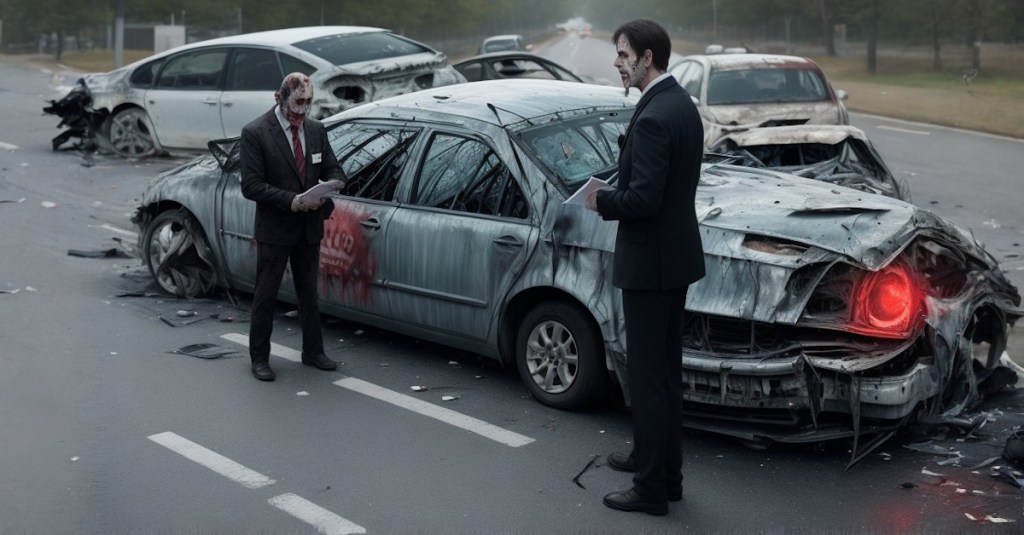
But now, just five years later, he’s ready to move north again. “We can’t afford the zombie attack insurance here anymore,” the ex-accountant says. “Our premium has more than doubled since we got here. It’s like, if the zombies don’t get you these days, the insurance companies will.”
Fernandez is not alone. Americans in certain states are facing much steeper costs to insure themselves against zombie attacks, and fewer companies than ever are offering zombie attack insurance because a growing number of players are exiting the market altogether.
Residents of California, Florida, New York and Texas have seen their zombie attack insurance rates climb 50% to 200% over the past three years, even as the risk of becoming a victim of the living dead has increased significantly in those same states. Other states are seeing similar, if lower, rate increases.
One reason: More insurance companies have stopped offering zombie attack insurance, calculating that the risks are too high as the costs associated with zombie virus outbreaks soar.
Consider:
- In 2021, Simon & Pegg Insurance pulled out of the California zombie insurance market, pointing to multi-billion-dollar payouts following the San Mateo and Venice Beach outbreaks.
- In 2022, Old Familiar Insurance stopped writing new policies or renewing existing customers for zombie attack insurance in Florida, citing costs associated with the Palm Beach, Sarasota and Tallahassee incidents.
- And just this year, Kingshead Insurance, the main player in the Texas zombie attack insurance market, declared bankruptcy in the aftermath of the Austin and Houston disasters.
Francis Elmendorfer, with the Zombie Attack Insurance Institute, an industry body, says that insurers face a host of rising costs associated with attacks. For example, she says that insurers are seeing higher costs to rebuild neighborhoods leveled when the government takes a scorched earth approach to eliminating an outbreak. Rebuilding costs have risen 55% just over the last few years, according to the Insurance Information Institute.
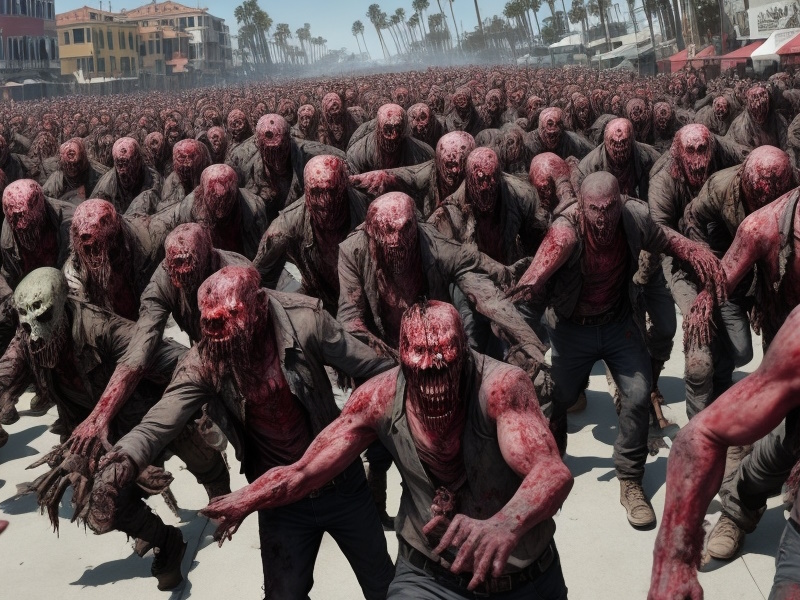
She also singles out rising litigation costs and growing payouts for liabilities related to so-called “follow-on zombification effects” – when an insured customer dies and then turns and bites other people. “All these rising costs are making it untenable for insurance companies to continue servicing these high-risk markets,” Elmendorfer said.
Ben Colder, a professor of finance with Tampa University who specializes in zombie insurance, says that it’s a simple matter of the math not adding up as insurance companies look to ensure they remain viable for the long term.
“High-density places like New York City and California, statistically speaking, are seeing higher rates of zombie attacks just because so many people are packed together. Sunbelt magnets like Florida and Texas are seeing huge population growth, which naturally leads to more undead assaults,” Colder said. “The higher payouts combined with the prospect of a growing number of outbreaks makes it simply unprofitable in the long run for the insurers, so they’re making the decision to cut their losses while they can.”
Colder draws a parallel to the insurance companies that are pulling out of states where the impacts of climate change are significantly increasing their risk profile and costs due to more powerful hurricanes or more frequent and intense wildfires. “Zombie outbreaks really are just another natural disaster that insurance companies have to factor into their business models,” Colder says.
A web of varying state laws complicates the insurance outlook. California, for example, has a state law that restricts private insurance companies from raising their annual zombie attack policy premiums at a rate higher than inflation.
Florida requires zombie attack insurance coverage to include payment for the death of the victim but also for any damages caused by the victim once they zombify and attack others. In an outbreak involving hundreds or thousands of casualties, the costs can easily run in the billions of dollars.
State governments have started to step in to offer public insurance programs where few or no private options are available. Texas, for example, offers its Lone Star Undead Casualty Plan, while Floridians can sign up for the state’s Sunshine Zombie Death and Dismemberment Program. However, these programs are often either more expensive than private programs or require substantial state subsidies.
Ex-accountant Raul Fernandez says that he considered going without zombie attack insurance but figured the risk was too high. “I live in a retirement community with lots of old people who could turn into one of the living dead at any moment. I can’t afford to not have attack insurance around here,” he says.
Instead, he and his wife have decided to move back to Minneapolis, where he estimates his zombie attack insurance premiums will be half what he paid this year in Cape Corel. “Sure, I might slip on the ice and crack my hip back in Minnesota,” he says. “But if I fall and crack my hip and then get attacked by a zombie, at least I’ll have insurance to protect my family.”
Like this kind of content? Subscribe to receive blog posts from the Bulletin of the Zombie Scientists in your Inbox or in the Reader app as they are published.
More Recent Posts
- Administration Weighs Deploying Undead to “Purify Woke Cities”
- President Fires Zombie Statistics Bureau Chief After Reported Rise in Undead Numbers
- Zombies of Different Generations Drawn to Different “Places of Meaning,” Study Finds
- “Z Visa” Program Would Let Wealthy Buy US Entry for Their Undead Relatives
- 6 Weeks after “Liberation Day,” Tariffs Still Loom for “Zombia”
Note: The Bulletin of the Zombie Scientists is a work of fiction. Any resemblance to persons (living, dead or living dead), actual organizations or actual events is entirely coincidental. See our About page and our Origin Story.
 Bulletin of the Zombie Scientists
Leave a comment