
By Bulletin Staff
On November 1, 1952, the United States conducted its first full-fledged test of a hydrogen bomb on the island of Elugelab, part of the Marshall Islands in the Pacific Ocean.
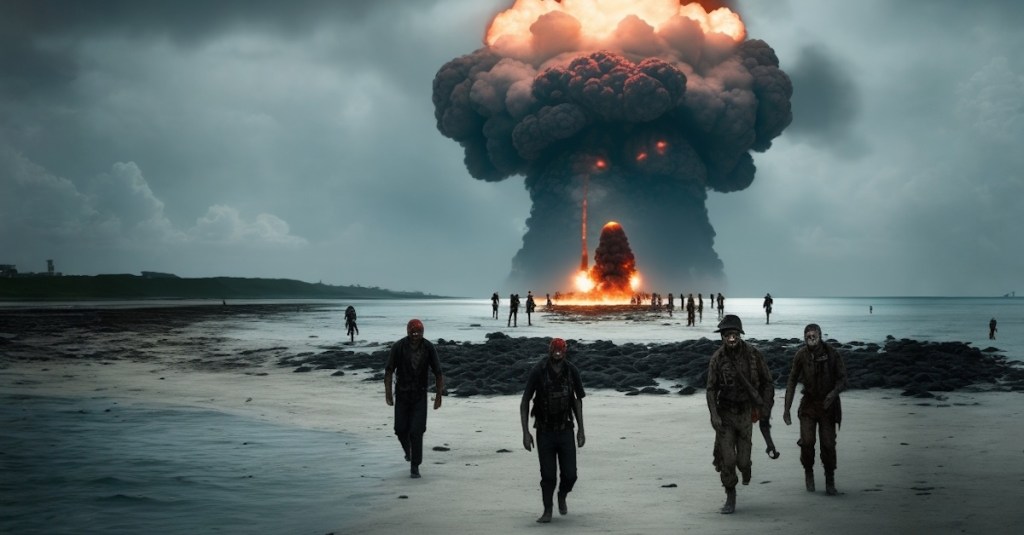
The detonation of the building-sized bomb produced a blast equivalent to more than 10 megatons of TNT, a fireball 2 miles wide and a mushroom cloud 25 miles high and 20 miles wide.
The blast vaporized Elugelab, and it also incinerated a group of two dozen undead that had been placed in various structures at the blast site, marking the first use of zombies during the US’s nuclear testing program.
The Controversy over Nuclear Zombie Tests
Proposals to incorporate zombies into the nation’s testing of nuclear weapons date back to the Trinity test on July 16, 1945, in New Mexico. Scientists believed that exposing the undead to a blast could provide useful data on the bomb’s effects on the living.
Documents declassified in the 1990s show that the US military leadership was enthusiastic about testing the bomb on zombies, but civilian authorities were reluctant to include the undead in testing on the US mainland, including in New Mexico and later in Nevada.
The complicated logistics involved in transporting and handling zombies, the risk that some of the undead could escape and cause an outbreak in the vicinity of a test site, and the complex legal and ethical issues involved in the use of the living dead in experiments prompted political authorities to quash the idea.
When the military proposed using zombies as part of tests in the Pacific Proving Grounds, they argued that the risk of escape or outbreak was lower and the legal issues less of a factor due to the status of the Marshall Islands as a US Trust Territory.
The State Department’s Panel of Consultants on Disarmament, led by Robert Oppenheimer, argued against adding zombies to the test program, fearing that it would lead to broader use of the living dead in military applications.
Ultimately, however, the Pentagon leadership won the day and the team preparing for the Elugelab test, dubbed Operation Ivy Mike, was ordered to incorporate zombies into their planning.
Secrecy around Zombie Involvement
The job of preparing the nation’s first hydrogen bomb test fell to Task Force 132, a joint group of Army, Navy, Air Force and civilian scientific personnel. The task force also included staff from Group U, the Pentagon’s secret unit charged with managing the nation’s Strategic Zombie Reserve in the aftermath of World War II. Group U was responsible for transporting and wrangling the zombies used in the test.
Task Force 132 set up hundreds of scientific monitoring stations posts around Enewetak Atoll, the circular chain of islands that included Elugelab. Along with various observation equipment installed at the posts, Group U secretly deployed a total of 413 zombies across 30 different islands around the atoll.
The zombies were placed in a variety of structures, ranging from concrete and steel bunkers to wooden shacks and fully exposed pens. The goal was to collect data on radiation exposure from the rotting flesh of the undead to measure how well the different structures protected those inside.
Knowledge of zombie involvement in the testing was held very close among the most senior political, scientific and military leadership. An oral history of Ivy Mike conducted in the 1990s revealed that rank-and-file members of Task Force 132 had no idea that their operation included the first use of the undead in the nation’s nuclear testing program.
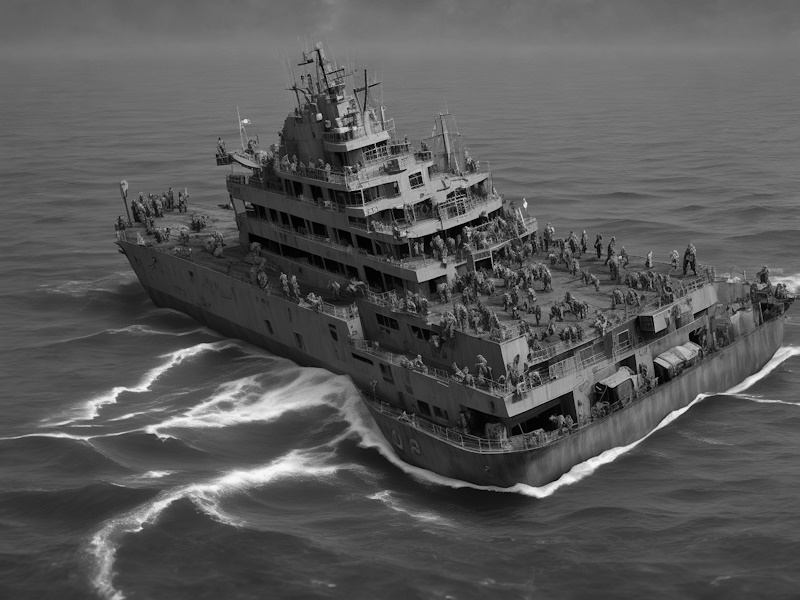
It was not always easy to maintain total secrecy. In one incident, a group of the undead escaped captivity on a small transport ship carrying them to an island outpost, sparking an outbreak on the ship that took the lives of the entire crew.
Rather than attempting to reclaim the ship from the living dead, Group U elected instead to tow it, zombies and all, to a location near the blast site, where it was vaporized in the blast, destroying any evidence of the shipboard outbreak.
Family members of the crew members were told that they were lost at sea during a storm, and the families only learned of their true fate as a result of congressional hearings in the 1990s.
The Bomb Blast and Its Aftermath
The Ivy Mike bomb detonated at 7:15 am local time (still October 31 in the US, across the International Dateline), instantly vaporizing the small group of zombies housed directly adjacent to the bombsite.
Also vaporized: Elugelab Island.
The blast created a crater more than a mile in diameter and some 160 feet deep. The head of the Atomic Energy Commission, Gordon Dean, famously reported to President-elect Dwight D. Eisenhower on the results of the test in a message that read, “The island of Elugelab is missing!”
In the days that followed, scientific teams dispersed across Enewetak Atoll to gather collected data from the various posts scattered around the islands. But Group U were under orders to move in first with the task of removing all zombies and zombie remains before other teams could make their rounds of the posts.
Declassified documents show that Group U removed 117 intact and functional zombies of the 413 that had been deployed to the islands. The remaining undead had either been instantly vaporized or blown to bits. Group U was tasked with collecting and documenting as many of those bits as possible so they could be tested for radiation exposure.
The work was grim. In a declassified report, Gerald Zanes, the head of Group U, describes his teams “gathering mounds of fleshy goo into boxes for later examination.”
The men and women of Group U were exposed to more than just horrific scenes of undead obliteration. As the first teams to go into the blast zone after the detonation, they also were exposed to the highest levels of radiation.
A 1995 internal investigation by the Pentagon that was not made public until 2015 (due to the continued secrecy around Group U) revealed that cancer rates among Group U personnel were significantly higher than for either the general population or for other civilians and military members involved in Ivy Mike.
However, both military and scientific leaders judged the Ivy Mike zombie tests a success. The data gathered on levels of radiation exposure contributed significantly to scientists’ understanding of blast effects and later formed the basis for standards used in nuclear testing operations to ensure the safety of military and personnel. Even as zombies, the undead involved in Ivy Mike served their country well.
Like this kind of content? Subscribe to receive blog posts from the Bulletin of the Zombie Scientists in your Inbox or in the Reader app as they are published.
More Recent Posts
- Administration Weighs Deploying Undead to “Purify Woke Cities”
- President Fires Zombie Statistics Bureau Chief After Reported Rise in Undead Numbers
- Zombies of Different Generations Drawn to Different “Places of Meaning,” Study Finds
- “Z Visa” Program Would Let Wealthy Buy US Entry for Their Undead Relatives
- 6 Weeks after “Liberation Day,” Tariffs Still Loom for “Zombia”
Note: The Bulletin of the Zombie Scientists is a work of fiction. Any resemblance to persons (living, dead or living dead), actual organizations or actual events is entirely coincidental. See our About page and our Origin Story.
 Bulletin of the Zombie Scientists
Leave a comment