
By Bulletin Staff
The US Navy has been working with dolphins since 1959, training the marine mammals to detect threats and retrieve objects underwater to aid sailors and Marines in the completion of their missions.
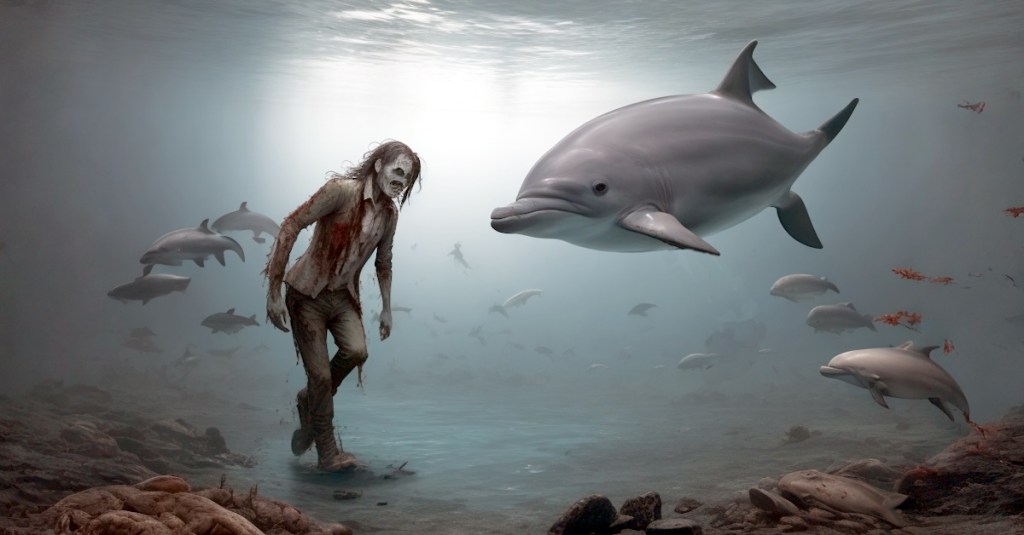
Now the Navy has begun teaching Flipper how to recognize and help clear so-called “underwater zombie minefields” that are increasingly complicating combat operations in conflict zones around the world.
The Navy’s Marine Mammal Program, based in San Diego, works primarily with bottlenose dolphins and California sea lions to assist in operations in harbors, coastal areas and in the open sea. According to the Navy, “Dolphins are trained to search for and mark the location of undersea mines that could threaten the safety of those on board military or civilian ships.”
Dolphins and sea lions also have long assisted with security, detecting unauthorized swimmers and divers in the water and helping to apprehend the intruders. But this is the first time that the Navy has enlisted our flippered friends to help in the fight against undead in the water.
Proposals to use dolphins in zombie-clearing operations date back to the Vietnam War, when US military personnel operating in rivers and coastal waters around the conflict zone frequently encountered underwater undead. The Vietcong were known to weight down groups of the undead in strategically important waters so that they could foul boat engines or intercept frogmen swimming in the waters – thus giving birth to the term “underwater zombie minefield.”
The Navy set up a program called “Mark 9” (“MK9”) in 1972 to train dolphins to clear the zombies from the rivers, but the US ended its active combat role in Vietnam before the program could graduate its first set of bottlenose warriors, and the program was shelved.
However, in 2022, the Pentagon’s Zombie Eradication and Tactics Agency (ZETA) revived the program to deal with what the military has described as a growing problem of undead found in waters where the US has warfighters undertaking operations.
“The number of undead that US forces are encountering during missions in rivers and coastal waters has increased significantly in the past 10 years. In order to ensure the success of US military operations in these areas in the years ahead, the Navy must be capable of detecting and neutralizing zombie threats wherever they appear, including underwater,” ZETA wrote in a report to Congress justifying funding for the reinvigorated program.
At the Zombie Neutralization Program’s dolphin training facility north of San Diego, Naval personnel are working with the marine mammals to enable them to detect and eliminate undead threats on the field of battle. The program makes use of real zombies that have been muzzled to render them incapable of harming the dolphins.
In underwater simulations of various types of river and coastal environments, the dolphins are trained to use their sharp sight to detect undead. In cloudy, muddy waters where sight might not be effective, the dolphins are able to use echolocation and their recently discovered capacity for electroreception to identify zombies in the water.
The dolphins carry a small micro-explosive device in their snout, and once a dolphin recognizes a zombie, the mammal places the device on the head of the undead and swims away. The device activates and explodes only when the dolphin reaches a safe distance, and the explosion neutralizes the threat by destroying the zombie’s brain.
On a mission, trained dolphins work in pairs or small groups in collaboration with specialized handlers. The dolphins swim ahead of a riverboat or a so-called Rigid Hull Inflatable Boat, scouring the waters and using their acute senses to identify and eliminate zombie concentrations. Each dolphin is outfitted with “backpacks” carrying loads of the micro-explosive devices, and the dolphins work together to supply each other with charges as their clearing work progresses.
Back on the boat, the dolphins’ handler tracks their location and can use video surveillance equipment mounted on the backpacks to map an underwater zombie minefield and monitor the clearing work to give the boat’s crew the all-clear signal when it is safe to proceed.
While the Navy says that the program to date has been successful and that no dolphins have been harmed in the course of training or operations, animal rights activists have raised questions about using the mammals to combat the zombie threat.
These groups have put forward ethical objections to exposing the dolphins to the risks inherent in training with, and undertaking military operations against, zombies. They also have raised issues regarding the dolphins’ agency, arguing that, while these creatures are highly intelligent and able to follow commands, they lack the capacity for informed consent typical of humans.
The Navy asserts that it highly values its dolphin servicemembers and invests heavily in proper care and training of the mammals before, during and after operations. The Navy also says that it has provided a high level of transparency about the nature of the program and its efforts to minimize any adverse impact on the dolphins in order to maintain the ethical integrity of the work and address public concerns.
“As the program continues, ongoing ethical assessments, adherence to stringent welfare protocols and efforts to ensure the dignity and well-being of our dolphin servicemembers will continue to be essential elements in the Navy’s ongoing war against the zombie menace,” the Navy has stated.
More Recent Posts
- Administration Weighs Deploying Undead to “Purify Woke Cities”
- President Fires Zombie Statistics Bureau Chief After Reported Rise in Undead Numbers
- Zombies of Different Generations Drawn to Different “Places of Meaning,” Study Finds
- “Z Visa” Program Would Let Wealthy Buy US Entry for Their Undead Relatives
- 6 Weeks after “Liberation Day,” Tariffs Still Loom for “Zombia”
Note: The Bulletin of the Zombie Scientists is a work of fiction. Any resemblance to persons (living, dead or living dead), actual organizations or actual events is entirely coincidental. See our About page and our Origin Story.
 Bulletin of the Zombie Scientists
Leave a comment