
By Bulletin Staff
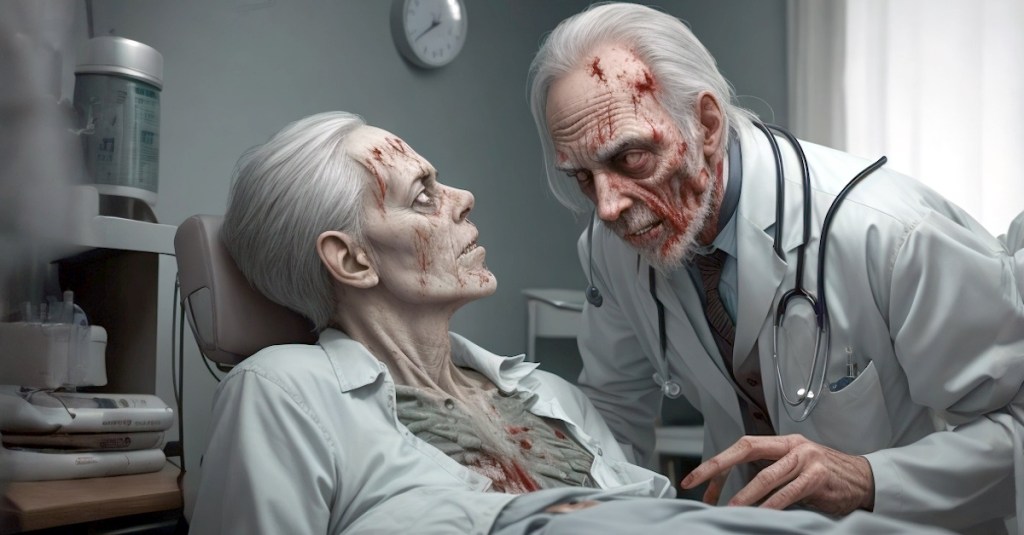
As the cold, flu and RSV season ramps up, the Centers for Disease Control’s National Center for Zombie Diseases is issuing its annual reminder that Americans should not confuse the symptoms of these seasonal viruses with the symptoms of infection with the zombie virus.
The CDC reported last week that seasonal flu activity continues to march upwards, as have reported cases of COVID-19 and cases of respiratory syncytial virus (RSV). That’s typical for the cooler winter months, experts say, when people spend more time indoors and are likely to come in contact with someone carrying one virus or another.
On the other hand, reported cases of infections with the zombie virus have remained stable over the past several months, according to Dr. Niels Creighton with the Zombie Diseases Center. That’s also typical, he said, because the zombie virus does not tend to be seasonal. “We more often see random outbreaks of varying intensity throughout the year, regardless of the weather,” he explained.
Dr. Creighton noted that the undead plague is most commonly spread by being bitten by someone already zombified rather than through particles in the air or on surfaces, as is the case with many other viruses. “You’re probably not going to become a zombie after touching a door handle that has an infected person’s snot on it. But you might pick up a common cold that way,” the doctor said.
However, the CDC’s zombie experts warn that people are more vulnerable to attack by a zombie when they are in an enclosed space with others who could be carrying the virus. “Just as you don’t want to be in close quarters with someone who might cough on you and give you a cold, you don’t want to be in a room with someone who might bite you and turn you into one of the living dead,” the Zombie Diseases Center said in its statement.
Cold, Flu, RSV or Zombie?
It can be difficult to distinguish the symptoms of common colds, the flu and RSV and the early symptoms of the zombie virus. In the initial stages of all these maladies, an infected person may have body aches and a fever.
Additional symptoms experienced with colds, the flu and RSV can include coughing, sneezing and a runny nose. Cold and flu symptoms can also include nasal congestion and sore throat, while RSV infections can cause wheezing.
Meanwhile, in addition to aches and fever, people infected with the zombie virus usually display such symptoms as delirium and, following death, reanimation and an insatiable hunger for human flesh and brains. Exposure to most strains of the zombie virus typically results in zombification within hours, experts say.
Dr. Creighton added that zombie virus infections are almost always accompanied by bite wounds on the victim, although not all zombie attack victims will reveal their injuries. “It’s not uncommon for people who have been bitten to hide their wounds from those around them because the victims feel like they will be abandoned or shunned,” the doctor said.
He also noted that tests are available for the flu, RSV and common colds like rhinovirus. Tests also are available for many strains of the zombie virus, but Dr. Creighton warned that the current zombie virus tests can take several hours to several days, and a person being tested may turn before the test results come back from the lab.
Treating Colds vs Treating Zombies
The regular seasonal illnesses will typically go away on their own within a couple weeks, but they can all lead to more serious complications, especially in vulnerable populations like the elderly and the very young, the immunocompromised and those with certain medical conditions like asthma, diabetes or heart conditions, according to the Centers for Disease Control.
For that reason, the CDC recommends that people in high-risk groups check in with their doctor if they are showing flu symptoms. Beginning an antiviral treatment promptly can lessen symptoms, shorten the duration of the illness and possibly prevent complications like pneumonia.
Doctors don’t typically prescribe antivirals for otherwise healthy people who show symptoms of colds or RSV – time and the body’s natural defenses will take care of the illness eventually. But again, high-risk individuals should check with their medical professional or seek urgent or emergency care if symptoms worsen or persist, experts say.
As for the zombie virus, currently there is no cure or effective treatment that can prevent an infected person from eventually zombifying, according to Dr. Creighton. “The old medical saw is, ‘Bit by Zeke, dead in a week.’ Unfortunately, that’s as true today as it was 200 years ago,” the doctor lamented.
The Zombie Diseases Center recommends reporting potential victims of zombie bites to the authorities immediately so that the infected can be secured and isolated so as not to pose a risk to family or humankind at large.
If that is not an option, Dr. Creighton said, the best way to care for someone infected by the zombie virus but not yet turned is to isolate them from others, keep them calm and as comfortable as possible, and, if feasible, secure them so they cannot escape and attack others after turning. Once they turn, the normal methods of containment apply, the doctor added.
Preventing Colds and Zombification
While there is no vaccine for common colds like rhinoviruses or the zombie virus, vaccines are available for the annual flu and, for vulnerable groups, for RSV. The CDC encourages all those eligible to get vaccinated.
Beyond that, the CDC suggests everyday preventive measures for reducing your chances of contracting one of the seasonal afflictions or RSV, and for preventing others from getting sick. That includes covering coughs and sneezes with a tissue or shirt sleeve, washing hands with soap and water for 20 seconds, and avoiding touching your face with unwashed hands.
And if you are sick, stay home and be a hero by not infecting others.
Meanwhile, the Zombie Diseases Center advises that the best preventive measure to keep from getting infected with the zombie virus is not to be around zombies. If you must be around zombies, the Center says, ensure that you are wearing protective clothing and appropriately armed or otherwise equipped to resist attack.
“And remember,” Dr. Creighton urged, “if you suspect that you have been wounded by a zombie, don’t try to hide that fact until it is too late and you become a threat to others. ‘Bit by something, say something’ is still the golden rule.”
Like this kind of content? Subscribe to receive blog posts from the Bulletin of the Zombie Scientists in your Inbox or in the Reader app as they are published.
More Recent Posts
- Administration Weighs Deploying Undead to “Purify Woke Cities”
- President Fires Zombie Statistics Bureau Chief After Reported Rise in Undead Numbers
- Zombies of Different Generations Drawn to Different “Places of Meaning,” Study Finds
- “Z Visa” Program Would Let Wealthy Buy US Entry for Their Undead Relatives
- 6 Weeks after “Liberation Day,” Tariffs Still Loom for “Zombia”
Note: The Bulletin of the Zombie Scientists is a work of fiction. Any resemblance to persons (living, dead or living dead), actual organizations or actual events is entirely coincidental. See our About page and our Origin Story.
 Bulletin of the Zombie Scientists
Leave a comment