
By Bulletin Staff
In the first of this two-part series, the Bulletin reports on a new Romero Institute report linking decades of Bigfoot sightings to an “undead megafauna” phenomenon. Part II of the series will look at the potential impact of the “Zombfoot” theory on how the public enjoys wild spaces and the unsolved questions around Bigfoot’s true origins.
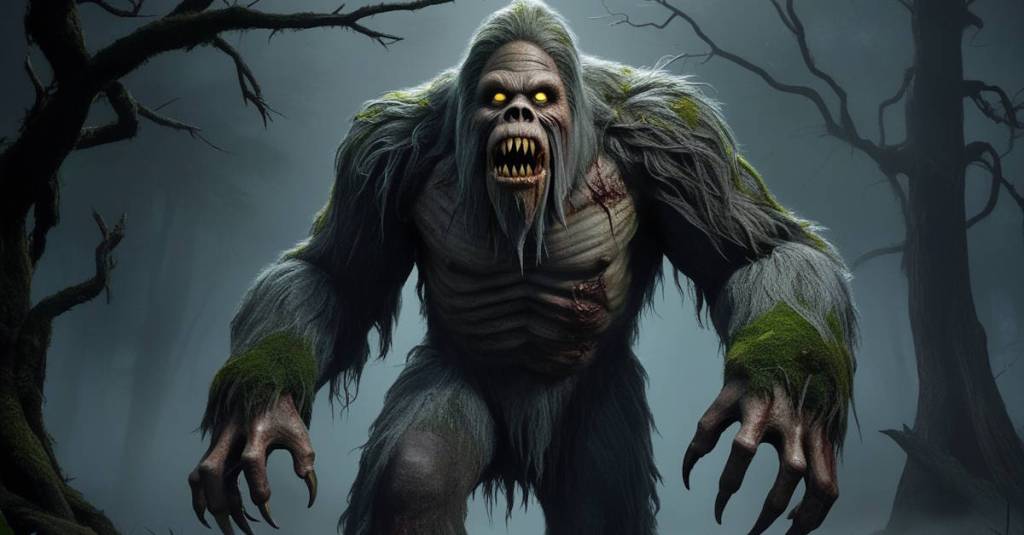
The creature commonly known as Bigfoot may not be a living species at all, but rather an “undead megafauna,” according to a newly released report from the Romero Institute for Zombie Studies that challenges long-held assumptions about one of North America’s most enduring mysteries.
The report, published this week by the Institute’s Department of Field Research, synthesizes decades of eyewitness accounts, photographic evidence and historical incidents to reach a stark conclusion: Many so-called Bigfoot sightings are more consistent with what researchers describe as “undead hominid megafauna,” or what some in the field have begun informally calling Zombfoot.
“Once you remove the assumption that Bigfoot is alive, the data suddenly makes much more sense,” explained Dr. Alan DeMoro, vice president of field research at the Romero Institute and lead author of the study. “We’re not dealing with an undiscovered living primate. We’re dealing with a creature that has already undergone biological failure.”
The study arrives at a time when interest in Bigfoot remains high, fueled by social media, amateur investigations and a steady stream of purported sightings. Yet despite advances in camera technology and widespread public attention, definitive evidence of Bigfoot’s existence has remained elusive.
The Romero Institute’s report suggests that may be because researchers, Bigfoot believers and mythbusters alike have been asking the wrong questions.
Rethinking the Evidence
According to the report, several long-observed features of Bigfoot encounters align more closely with documented zombie behavior than with that of a living animal. For example, witnesses frequently describe the creature as moving with an uneven or “loping” gait, a phenomenon that the Institute’s biomechanical team views as a “dead flag.”
“That’s not efficient locomotion for a healthy organism of that size,” said Dr. Priya Nandakumar, a biomechanical specialist who contributed to the analysis. “It is, however, consistent with partial neuromuscular degradation. In other words, something is moving the body, but not in the way a living system would.”
The report also highlights recurring descriptions of a strong odor, variously characterized as musky, decaying or “indescribably bad,” as well as the absence of any verified nesting sites, feeding patterns or sustainable population structures.
“These are not the hallmarks of a viable species,” Nandakumar said. “They are characteristics of something that is no longer participating in normal biological processes. Something that’s dead or, more accurately, undead, in other words.”
Explaining the Blurry Photos
One of the most persistent quirks of Bigfoot evidence has been the quality of images of the creature captured in recent years. Despite the wide availability of high-resolution cameras, nearly all photographs and videos of the creature remain indistinct. The Romero Institute’s researchers attribute this to a phenomenon it calls “necro-optical distortion,” or NOD.
“Some undead entities have been found to interfere with local visual coherence,” said Dr. Leonard Ruiz, director of applied paranecrology at the Institute. “We’ve observed similar effects in some urban zombie outbreaks: graininess, motion smear and occasional lens anomalies that cannot be explained by environmental factors alone.”
According to Ruiz, the effect may stem from a combination of tissue instability and low-level electromagnetic disruption. “In short, it’s not that cameras fail to capture Bigfoot clearly,” he said. “It’s that Bigfoot fails to be alive clearly.”
Revisiting a Key Historical Incident
The report also reexamines the 1924 Ape Canyon incident in Washington State, long considered one of the earliest and most dramatic Bigfoot encounters. In that case, a group of miners reported being attacked by a group of large, apelike creatures that hurled rocks at their cabin.
Traditionally interpreted as territorial Sasquatch behavior, the Romero Institute suggests a different explanation. “Rock throwing is not random aggression, it’s targeting,” DeMoro said. “Specifically, cranial targeting consistent with early-stage undead aggression and feeding patterns.”
Dr. Marisol Varga, a historian of anomalous events who contributed to the report, noted that the miners’ descriptions include several details that are difficult to reconcile with known wildlife behavior.
“The creatures were described as relentless, uncommunicative and indifferent to injury,” Varga said. “Those are not typical animal responses. Those are indicators of the kind of degraded cognitive and neurological function that we’d expect to see in the undead.”
The Mystery of Missing Remains
Skeptics have long pointed to the absence of physical evidence such as bones, carcasses or DNA as a major argument against the existence of Bigfoot. The Romero researchers contend that this absence may actually support the Zombfoot hypothesis.
“There are a couple plausible explanations for the lack of recoverable remains,” Ruiz said. “One is reanimation. Bodies of the undead do not remain inert long enough to be discovered. Another is intraspecies consumption, or zombie-on-zombie cannibalism, which is uncommon but not unheard of in undead populations.”
Nandakumar said the implication is that researchers may have been searching for static evidence in a system defined by movement. “We’ve been looking for something that stays still and undisturbed. That may have been our first mistake,” she said.
Internal Debate Continues
Not all researchers are convinced that Zombfoot creatures are stalking the wilds. The report acknowledges ongoing disagreements within the broader field of anomalous biology.
Some cryptozoologists, for example, continue to argue that Bigfoot represents an undiscovered primate species. Others propose more speculative explanations, including interdimensional or alien origins.
“Our goal is not to eliminate debate, but to bring it into alignment with the available evidence,” DeMoro said. “And right now, the evidence points in a direction that is, admittedly, uncomfortable for both professional researchers and amateur Bigfoot hunters that have invested so much time and effort to find the elusive creature.”
Stay tuned for Part 2 of this series, which will look at the potential impact of the “Zombfoot” theory on how the public enjoys wild spaces and the unsolved questions around Bigfoot’s true origins.mbie virus, maybe log off for a while and go for a hike.”
Enjoy educational zombie-related content? Subscribe to receive blog posts from the Bulletin of the Zombie Scientists in your Inbox or in the Reader app as they are published.
More Recent Posts
- Bigfoot or “Zombfoot”? Sasquatch May Be Undead, Study Suggests – Part I
- “Zombmaxxing” Trend Putting Youth at Risk of Zombification, Researchers Warn
- Administration Weighs Deploying Undead to “Purify Woke Cities”
- President Fires Zombie Statistics Bureau Chief After Reported Rise in Undead Numbers
- Zombies of Different Generations Drawn to Different “Places of Meaning,” Study Finds
Note: The Bulletin of the Zombie Scientists is a work of fiction. Any resemblance to persons (living, dead or living dead), actual organizations or actual events is entirely coincidental. See our About page and our Origin Story.
 Bulletin of the Zombie Scientists
Leave a comment